Nintendo Switch 2 Review (2025)
Specs, Features, Games & Everything You Need to Know
Last Updated: April 28, 2025 • 25 min read • 8.7/10
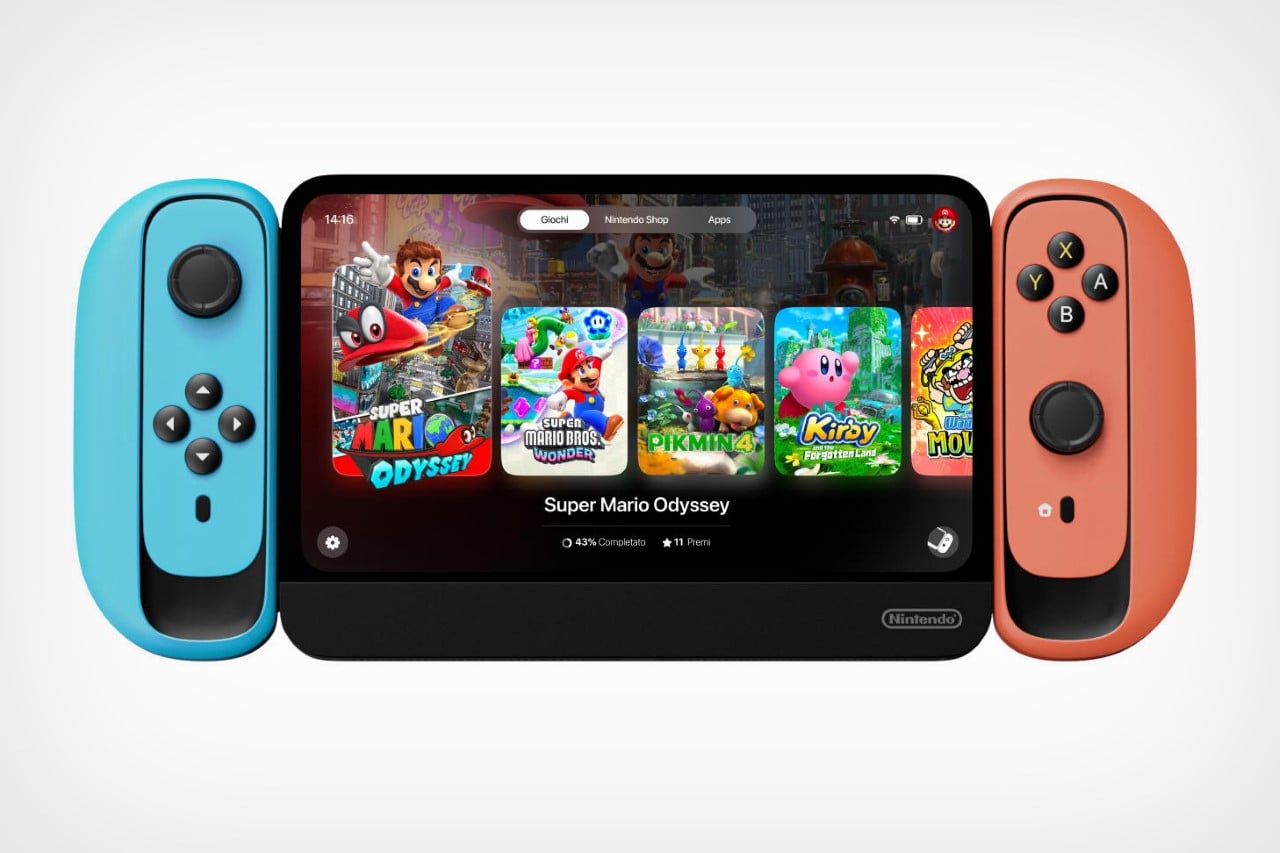
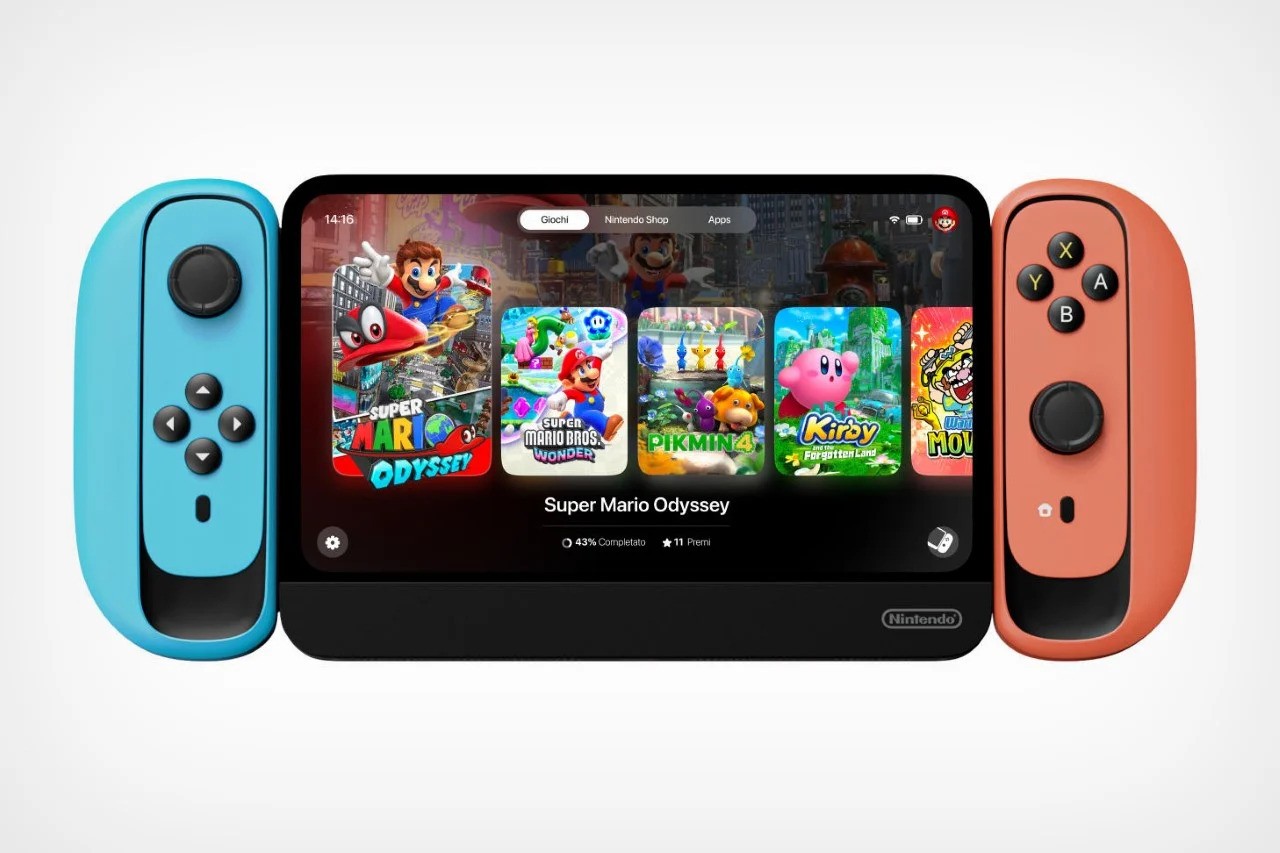
*Concept render – Not official Nintendo imagery
Executive Summary
The Nintendo Switch 2 represents a significant evolution of Nintendo’s hybrid console concept, launching globally on June 5, 2025 for $449.99. It features a larger 7.9-inch 1080p LCD screen with 120Hz refresh rate, custom Nvidia hardware with DLSS and ray tracing support, and innovative magnetic Joy-Con 2 controllers with mouse functionality.
The console can output up to 4K/60fps or 1440p/120fps when docked, includes 256GB of internal storage, and maintains backward compatibility with most original Switch games. While the hardware improvements are substantial, the higher price point and increased game costs ($70-$80) may limit accessibility compared to its predecessor.
Our verdict: 8.7/10 – A worthy upgrade for Nintendo fans and gaming enthusiasts, though the increased cost may deter budget-conscious families who embraced the original Switch.
1. Introduction: Nintendo’s Next Chapter
The original Nintendo Switch defied expectations, carving out a unique space in the gaming landscape with its hybrid design and becoming one of the best-selling consoles of all time, moving over 150 million units and selling over a billion games since its 2017 launch. After seven years of unprecedented success and mounting anticipation, Nintendo has officially pulled back the curtain on its successor. Aptly named the Nintendo Switch 2, this new console represents an evolution, not a revolution, building upon the foundation laid by its predecessor.
Officially unveiled following years of speculation and leaks, the Switch 2 promises a significant leap in power, a refined design, and innovative new ways to play and connect, all while retaining the core hybrid flexibility that defined the original. The console is set to launch globally on June 5, 2025, following official reveals in January and April 2025.
The decision to name the console “Nintendo Switch 2” is telling. Rather than opting for a completely new brand identity, which carried risks as demonstrated by the Wii U’s struggle following the Wii’s success, Nintendo chose continuity. This leverages the immense brand recognition and positive association built by the original Switch. It clearly communicates to the massive existing user base of over 150 million and potential new customers that this is a direct successor, maintaining the beloved hybrid concept while offering substantial upgrades.
Ready to experience the next generation of Nintendo gaming?
The Nintendo Switch 2 is available for pre-order now!
Pre-order on AmazonOfficial Nintendo Switch 2 Overview Trailer
2. Key Specifications at a Glance
The Nintendo Switch 2 represents a significant technical upgrade over its predecessor, addressing many long-standing hardware limitations while introducing next-generation features that bring it closer to modern console and gaming PC capabilities. From the larger, sharper display to the advanced Nvidia graphics with DLSS and ray tracing support, the Switch 2 aims to deliver more immersive gaming experiences both in handheld and docked modes.
3. Launch, Price, and Availability
Nintendo managed the Switch 2 reveal with a phased approach, building anticipation after years of rumors. An initial “first-look” announcement arrived on January 16, 2025, confirming the console’s existence, name, and design direction, including the new magnetic Joy-Con 2 controllers and a glimpse of a new Mario Kart title. This was followed by a comprehensive, hour-long Nintendo Direct presentation on April 2, 2025, which detailed the console’s full specifications, features, launch games, pricing, and the official release date of June 5, 2025.
The Switch 2 arrives with a significantly higher price tag than its predecessor, immediately drawing attention and some criticism. The standard console is priced at $449.99 USD / £395.99 GBP / €469.99 EUR / AU$699.95 / ¥49,980 JPY / CA$629.99. This represents a $150 increase over the original Switch’s 2017 launch price and $100 more than the Switch OLED model.
Launch Bundle
To incentivize early adoption, Nintendo offers a launch bundle including the console and a digital download code for Mario Kart World for $499.99 USD / £429.99 GBP / €509.99 EUR / AU$769.95, available until Fall 2025. While this bundle offers savings compared to buying the $80 Mario Kart World separately, the base console price places the Switch 2 closer to competitors like the PlayStation 5 and Xbox Series X at their launch, and notably above the entry-level Steam Deck models.
The pre-order phase for the Switch 2 was marked by considerable turbulence. Initially planned to open shortly after the April 2nd Direct, Nintendo delayed the US pre-orders. This delay was attributed to the need to assess the impact of controversial new US tariffs on goods imported from China and other manufacturing hubs like Vietnam, where the Switch 2 is assembled.
When pre-orders finally opened, demand massively outstripped supply, leading to widespread sell-outs and what reports described as a “chaotic” experience for consumers scrambling to secure a unit. Nintendo itself issued warnings, particularly in the US and Japan (where 2.2 million people applied for My Nintendo Store pre-orders), acknowledging that they could not guarantee launch day delivery even for those who registered interest, advising customers to also try third-party retailers.
Pre-order Your Nintendo Switch 2 Today
Beat the rush and secure your Nintendo Switch 2 before launch day. Amazon offers guaranteed delivery date options and easy cancellation if you change your mind.
We Played Nintendo Switch 2: First Hands-On Preview
4. Hardware Specifications and Performance
The Nintendo Switch 2 represents a significant technological leap over its predecessor, addressing many of the hardware limitations of the original models while introducing next-generation features.
4.1. The Display
Perhaps the most immediately noticeable upgrade is the display. The Switch 2 boasts a large 7.9-inch LCD screen, a considerable size increase compared to the 6.2-inch original Switch and the 7-inch Switch OLED. Crucially, the resolution in handheld and tabletop modes has been doubled to 1920×1080 (Full HD), finally bringing sharp, detailed visuals to portable play.
Further enhancing the visual experience, the screen supports HDR10 for improved contrast and color vibrancy, and features Variable Refresh Rate (VRR) up to 120Hz, allowing for smoother motion and reduced screen tearing in compatible games.
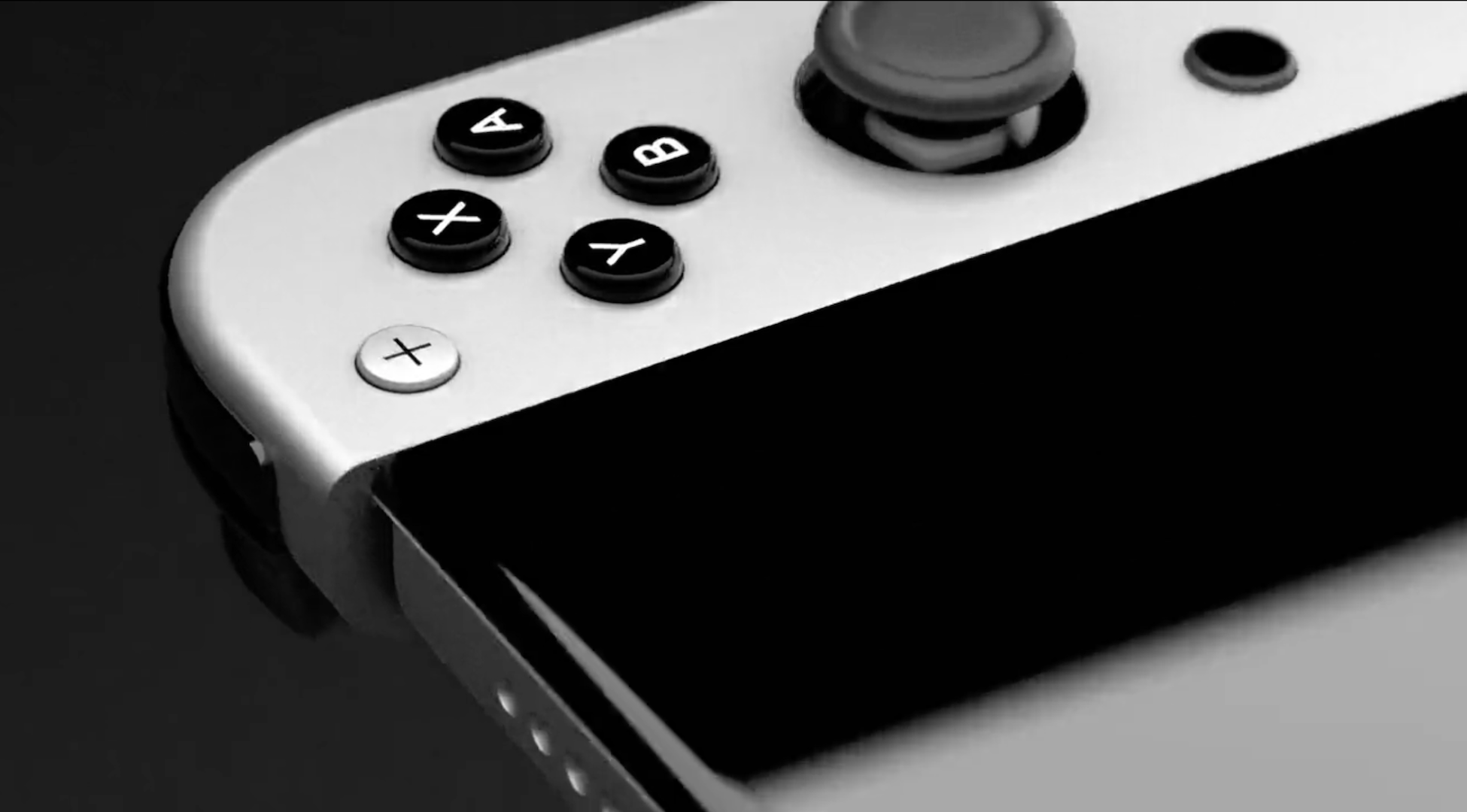
The choice of LCD technology over OLED has been a point of discussion. While the Switch OLED model was lauded for its vibrant colors and perfect blacks, Nintendo opted for an advanced LCD panel for the Switch 2. This decision was likely driven by a need to balance cost and features. While OLED offers superior contrast, the Switch 2’s LCD panel reportedly surpasses the Switch OLED in brightness and color accuracy. More importantly, this high-quality LCD enabled Nintendo to incorporate 1080p resolution, 120Hz refresh rates, VRR, and HDR support – features absent on the Switch OLED’s 720p/60Hz panel.
4.2. Processing Power
Internally, the Switch 2 is powered by a custom Nvidia system-on-a-chip (SoC), frequently identified by its rumored codename T239 “Drake”. Nintendo officially states this provides “significantly improved CPU and GPU performance” compared to the original Switch, resulting in faster processing, more detailed graphics, and reduced loading times.
Storage sees a massive improvement, with 256GB of internal UFS storage confirmed. This is eight times the capacity of the original Switch (32GB) and four times that of the OLED model (64GB), providing much more space for game installs and save data out of the box. For expansion, however, the Switch 2 exclusively uses microSD Express cards (up to 2TB supported). While these cards offer significantly faster data transfer speeds necessary for the more demanding games and higher-resolution assets, they are not backward compatible with the standard microSD/SDHC/SDXC cards used in the original Switch models for game data.
Regarding RAM, official Nintendo specifications omit the exact amount. However, consistent and credible leaks, reportedly based on shipping manifests and component analysis, point to 12GB of LPDDR5X RAM. This would be a threefold increase over the original Switch’s 4GB and even surpasses the 10GB available to games on the Xbox Series S. This substantial RAM increase would be crucial for handling larger game worlds, higher-resolution textures, and advanced features like GameChat running alongside demanding games.
4.3. Graphics and Performance
When connected to a television via the included dock, the Switch 2 significantly elevates the visual experience. It supports a maximum output resolution of 4K (3840×2160) at 60 frames per second, a major upgrade from the 1080p maximum of the original Switch. Furthermore, the console can output at 1080p (1920×1080) and 1440p (2560×1440) resolutions at up to 120 frames per second, enabling significantly smoother gameplay on compatible displays. HDR (High Dynamic Range) output is also supported in docked mode, enhancing visual depth and color.
Crucial to achieving these ambitious performance targets, especially in a hybrid console, is the confirmed support for modern graphical technologies. The Switch 2 utilizes Nvidia DLSS (Deep Learning Super Sampling), an AI-powered upscaling technique that renders games at a lower internal resolution and intelligently reconstructs the image to a higher target resolution (like 4K) with minimal perceived loss in quality.
Additionally, the custom Nvidia chip includes dedicated hardware for Ray Tracing, enabling more realistic lighting, shadows, and reflections in games that implement the feature. Nintendo and Nvidia have emphasized that the implementation of both DLSS and Ray Tracing is optional and up to individual game developers.
Maximize Your Switch 2 Experience
Get the most out of your Nintendo Switch 2’s powerful graphics capabilities with a compatible 4K TV or high refresh rate gaming monitor.
MKBHD’s Hands-On Impressions
4.4. Battery Life
Powering the Switch 2 is a 5220mAh battery. Nintendo provides an official estimated battery life range of approximately 2 to 6.5 hours on a single charge. This compares to the 4.5 to 9 hours estimated for the Switch OLED (4310mAh battery) and the original Switch (post-2019 revision, also 4310mAh), and 3 to 7 hours for the Switch Lite (3570mAh). Recharging the console takes approximately 3 hours when in sleep mode.
Despite the Switch 2 having a physically larger battery capacity than its predecessors, the significantly lower maximum estimated playtime highlights the increased power demands of the new hardware. The more powerful custom Nvidia SoC, the larger, higher-resolution 1080p display, and support for demanding features like 120Hz refresh rates, VRR, and HDR all contribute to higher energy consumption.
Users should anticipate battery life closer to the lower end of the 2-6.5 hour range when playing graphically intensive Switch 2 titles, especially with features like high brightness or 120Hz mode enabled. The actual duration will vary considerably depending on the game and system settings, potentially even more so than with the original Switch due to the wider range of performance capabilities and features.
5. Key New Features
Beyond the internal upgrades, the Nintendo Switch 2 introduces several new features designed to enhance gameplay, social interaction, and overall usability.
5.1. Joy-Con 2 Controllers
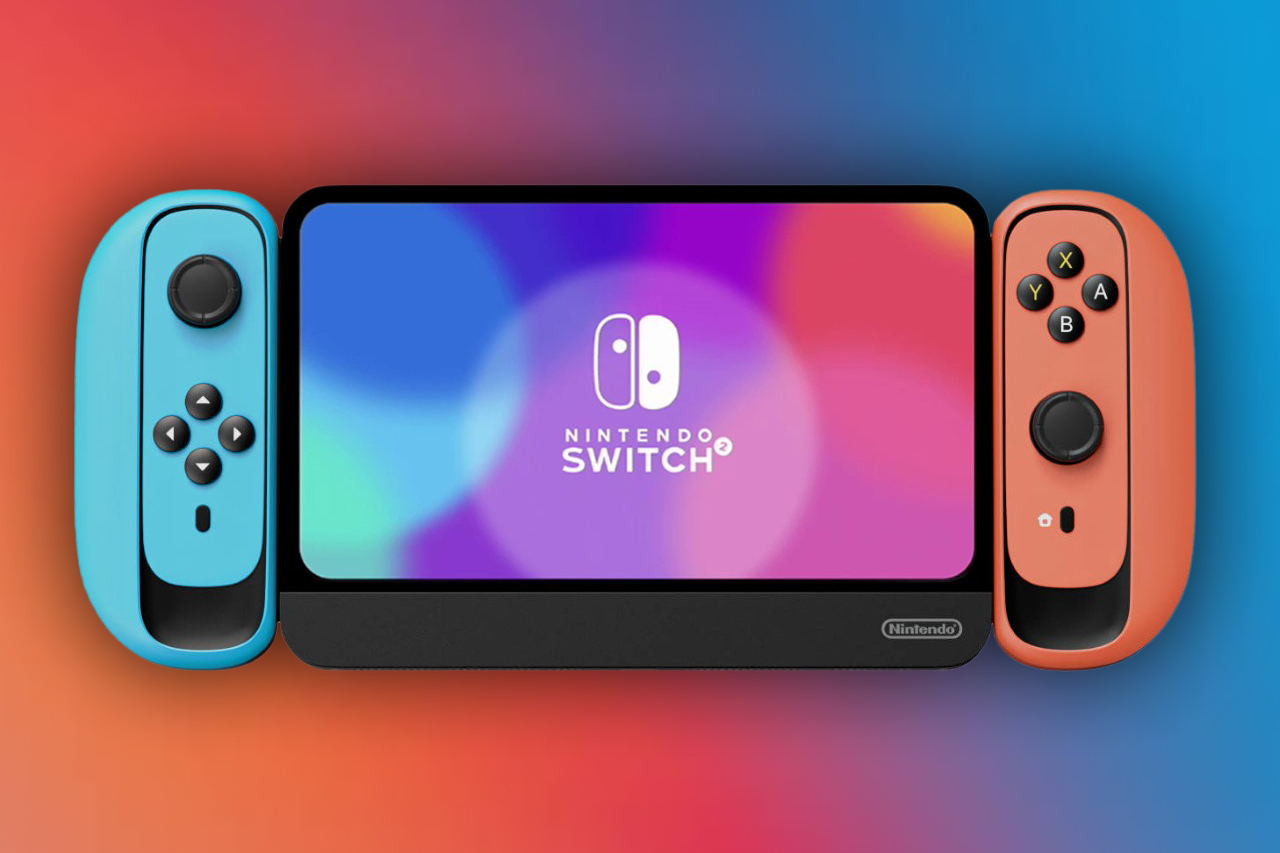
The iconic detachable controllers have received a significant overhaul. The Joy-Con 2 controllers ditch the original rail system in favor of a magnetic attachment mechanism, allowing them to “snap” securely onto the sides of the console. Release buttons located on the back of the controllers facilitate easy detachment. Physically, the Joy-Con 2 are taller and feature a more curved, ergonomic design compared to the originals, aiming for improved comfort during play.
A standout innovation is the new mouse functionality. When detached, either the left or right Joy-Con 2 can be placed with its magnetic connection side down on a flat surface (like a table or even clothing fabric) and used like a computer mouse. This feature incorporates a dedicated mouse sensor within the controller and opens up possibilities for more intuitive control in genres that traditionally rely on mouse input, such as first-person shooters, strategy games, point-and-click adventures, or even navigating complex menus.
Key Joy-Con 2 Improvements
- Magnetic Attachment: Replaces rail system for easier connection/removal
- Mouse Functionality: Place magnetic side down to use as a mouse on flat surfaces
- Improved Ergonomics: Taller with curved design for better comfort
- New ‘C’ Button: Quick access to GameChat and other functions
- Built-in Microphone: For voice chat without additional accessories
- Enhanced HD Rumble: More precise haptic feedback
- Larger Analog Sticks: Improved durability and smoother movement
- 20-Hour Battery Life: Per controller, extended from previous models
Potential Concern: Joy-Con Drift
Despite hopes for a permanent fix to the notorious “Joy-Con drift” issue that plagued the original controllers, Nintendo confirmed that the Switch 2 Joy-Cons do not use Hall Effect sensors in their analog sticks. While Nintendo claims improvements in durability, the absence of Hall Effect technology means the potential for stick drift remains a concern for long-term users.
5.2. GameChat
Addressing a significant weakness of the original Switch’s online infrastructure, the Switch 2 introduces GameChat, an integrated system for social communication. Activated seamlessly by pressing the ‘C’ button on the right Joy-Con 2, GameChat allows players to connect with friends on their list. It supports voice chat for up to 12 people simultaneously, utilizing the console’s built-in microphone (which features noise and echo cancellation) or the mic in the Joy-Con 2.
Furthermore, GameChat enables video chat and screen sharing for up to four players at a time, provided they have a compatible USB-C camera connected (like the official Nintendo Switch 2 Camera, sold separately). Users can see their friends’ faces and watch their gameplay in real-time, even if they are playing different games.
GameChat Features
- One-click access via dedicated ‘C’ button
- Voice chat with up to 12 players simultaneously
- Video chat with up to 4 players (requires camera accessory)
- Real-time screen sharing
- Built-in noise and echo cancellation
- Robust parental controls for users under 16
- User reporting system for safety
Safety features, including the ability to report users and robust parental controls for users under 16 (requiring approval via the Parental Controls app), are included. GameChat is available free for all Switch 2 owners until the end of March 2026; after this “Open-Access” period, a paid Nintendo Switch Online (NSO) membership will be required to use the feature.
5.3. The Dock Upgrade
The Nintendo Switch 2 comes bundled with a redesigned dock that enables its enhanced TV mode capabilities. This new dock facilitates video output up to 4K resolution at 60fps or 1080p/1440p at 120fps, along with HDR support. To handle the increased heat generated by outputting at these higher resolutions and frame rates, the dock incorporates a built-in fan for active cooling.
Aesthetically, the dock features a more rounded design compared to previous iterations. It includes the necessary ports: HDMI output, an AC adapter port, a wired LAN port for stable online connections (also present on the Switch OLED dock), and USB ports (two USB 2.0 confirmed).
The addition of active cooling in the dock is a significant, if subtle, engineering change. It directly addresses the thermal challenges inherent in pushing more powerful hardware to achieve 4K and high-frame-rate output. The fan ensures that the console can consistently deliver its advertised docked performance levels without compromising stability.
5.4. Backward Compatibility
Nintendo has confirmed that the Switch 2 offers backward compatibility with the vast majority of the original Nintendo Switch library. The console features a game card slot that accepts both new Switch 2 game cards and original Switch game cards. Digital games purchased on the eShop are also transferable, facilitated by the Nintendo Account system and the new “Virtual Game Card” feature.
Furthermore, existing wireless peripherals like original Joy-Cons and the Nintendo Switch Pro Controller can be paired and used with the Switch 2.
Compatibility Limitations
However, the compatibility is not absolute. Nintendo has stated that “certain Nintendo Switch games may not be supported on or fully compatible with Nintendo Switch 2”. An initial list identified 122 titles with potential “start up issues” or “in-game compatibility issues” that were under investigation. The incompatibility is primarily due to hardware differences; for example, the lack of an IR camera on the Joy-Con 2 makes Nintendo Labo Toy-Con 04: VR Kit definitively incompatible.
Adding another layer to backward compatibility is the introduction of “Switch 2 Editions” for some existing first-party titles, such as The Legend of Zelda: Breath of the Wild, Tears of the Kingdom, and Super Mario Party Jamboree. These versions promise enhanced graphics, potentially smoother frame rates, or even new content leveraging the Switch 2’s capabilities. However, accessing these upgrades for games already owned on the original Switch may require a paid update, a decision that has drawn criticism from the community.
5.5. Quality of Life Improvements
Dual USB-C Ports
The console now features two USB-C ports – one on the bottom (for charging and docking) and a new one on the top. The top port allows for convenient charging while using the console in tabletop mode and can also be used for connecting accessories. Only the bottom port supports video output.
Improved Kickstand
Replacing the original Switch’s notoriously flimsy kickstand is a much more robust, freely adjustable stand that spans the width of the console, similar in function to the one on the Switch OLED model. This provides stable viewing angles for tabletop play.
Enhanced Audio
The built-in stereo speakers deliver clearer, more natural sound quality. The console also supports spatial 3D audio effects through headphones (via the returning 3.5mm jack) and, following a system update, through the built-in speakers as well.
Virtual Game Cards
This new system aims to improve the management and accessibility of digital game libraries. It allows users to easily view, load, play games on up to two different Switch 2 consoles associated with their account, and even facilitate lending or borrowing digital games within a Nintendo Account family group.
Upgraded Connectivity
Wireless networking is improved with support for Wi-Fi 6. Bluetooth connectivity has also been enhanced, likely utilizing a newer standard than the original’s Bluetooth 4.1, benefiting from larger and more numerous antennas for better stability. The dock retains a wired LAN port for the most stable online connection.
Accessibility Features
Nintendo has added new accessibility options, including adjustable font sizes, a screen reader function, and speech-to-text capabilities within GameChat.
Hands-On with the Nintendo Switch 2 from BeatEmUps
6. Design and Build Quality
Visually, the Nintendo Switch 2 retains the fundamental tablet-with-detachable-controllers form factor of its predecessor, ensuring immediate familiarity. However, it is physically larger to accommodate the 7.9-inch screen. With the Joy-Con 2 controllers attached, the console measures approximately 4.5 inches tall by 10.7 inches wide (116mm x 272mm). Notably, its thickness remains identical to the original Switch and OLED models at 0.55 inches (14mm). This makes it taller and wider than both previous iterations.
In terms of weight, the Switch 2 console itself weighs approximately 0.88 lbs (401g), increasing to 1.18 lbs (534g) with the Joy-Con 2 controllers attached. This is noticeably heavier than the original Switch (approx. 0.88 lbs / 400g with Joy-Cons) and the Switch OLED (approx. 0.93 lbs / 420g with Joy-Cons). The increased weight, primarily due to the larger screen and potentially bigger battery, could impact comfort during extended handheld play sessions.
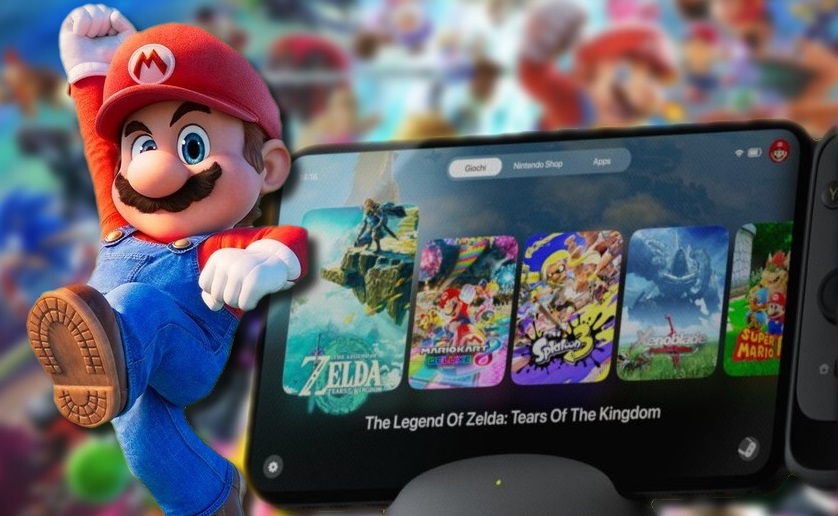
*Fan-made concept – Not official Nintendo hardware
The overall build incorporates the refinements mentioned earlier: magnetic Joy-Con 2 attachment, the improved multi-angle kickstand, dual USB-C ports, and redesigned ventilation grilles. The Joy-Con 2 controllers themselves feature a more ergonomic, curved shape.
Nintendo’s decision to maintain the original’s 0.55-inch thickness, despite adding a larger screen, more powerful internals, and a bigger battery, appears deliberate. It prioritizes preserving the familiar tablet-like feel and ensuring continued portability, even though it necessitated making the device wider and taller. This consistency in thickness aims to retain a key element of the Switch’s appeal.
However, the combination of the increased overall dimensions and the noticeable weight gain might present an ergonomic trade-off. While hands-on reports suggest it may feel more balanced or comfortable than the even heavier Steam Deck, the raw numbers indicate the Switch 2 will likely induce more fatigue during long handheld sessions than the significantly lighter Switch OLED. This could subtly encourage more frequent use in tabletop or docked modes for some users, despite the improved Joy-Con 2 ergonomics.
Protect Your Nintendo Switch 2
With its larger size and premium build, protecting your Nintendo Switch 2 while on-the-go is essential. Browse compatible carrying cases, screen protectors, and grips to enhance comfort and protection.
Original Switch vs. Switch 2 Size Comparison
7. Game Library and Exclusives
A console is only as good as its games, and Nintendo launched the Switch 2 with a mix of new titles, enhanced ports, and strong third-party commitments. Headlining the June 5th launch was Mario Kart World, a brand-new entry in the beloved racing franchise, showcased alongside the console reveal and available in the launch bundle. Also available on day one was the Nintendo Switch 2 Welcome Tour, described as a paid interactive demo designed to showcase the hardware’s new features. Following closely was Donkey Kong Bananza, a new 3D platformer starring the iconic ape, scheduled for release on July 17, 2025.
Major Launch Window Titles
- Mario Kart World – June 5, 2025 (Launch Day)
- Nintendo Switch 2 Welcome Tour – June 5, 2025 (Launch Day)
- Donkey Kong Bananza – July 17, 2025
- Elden Ring (Switch 2 Edition)
- Cyberpunk 2077: Ultimate Edition
- Street Fighter 6
- Hogwarts Legacy
- EA SPORTS Madden NFL 25
- Tony Hawk’s Pro Skater 3+4
- Hades II
Future Exclusives & Titles
- The Duskbloods – FromSoftware’s new gothic horror exclusive (2026)
- Project 007 – IO Interactive’s James Bond game
- Metroid Prime 4: Beyond (likely enhanced for Switch 2)
- Pokemon Legends Z-A (likely enhanced for Switch 2)
- New Kirby Air Ride
- Hyrule Warriors prequel set during the Imprisoning War
- The Legend of Zelda: Breath of the Wild (Switch 2 Edition)
- The Legend of Zelda: Tears of the Kingdom (Switch 2 Edition)
- Super Mario Party Jamboree (Switch 2 Edition)
Perhaps more significant for long-term prospects was the robust third-party support demonstrated from the outset. The Switch 2 launched with or is soon receiving ports of major, graphically demanding titles that were previously unavailable or heavily compromised on the original Switch. This includes acclaimed games like Elden Ring, Cyberpunk 2077, and Street Fighter 6. Looking further ahead, Nintendo secured console exclusivity for The Duskbloods, a new gothic horror title from renowned developer FromSoftware (creators of Elden Ring and Bloodborne), slated for 2026.
Crucially, the Switch 2’s backward compatibility provides immediate access to the thousands of games already available for the original Nintendo Switch, both physical and digital. This instantly grants the new console a massive and diverse library from day one. The addition of Nintendo GameCube titles to the Nintendo Switch Online + Expansion Pack service, exclusive to Switch 2, further bolsters the available classic content.
Pricing Controversy
The software ecosystem is not without controversy, primarily concerning pricing. New, first-party Switch 2 titles are launching at significantly higher price points than previous Nintendo generations. Donkey Kong Bananza is priced at $70 USD, while Mario Kart World carries an $80 USD price tag.
This move aligns Nintendo with, and in the case of Mario Kart World, exceeds the $70 benchmark set by Sony and Microsoft for their current-generation games. This price hike has generated considerable backlash within the community, with debates raging over whether it reflects increased development costs and inflation or represents excessive corporate greed. Compounding this is the potential cost associated with upgrading existing Switch games to their enhanced “Switch 2 Editions”.
This sharp increase in first-party game prices marks a significant departure for Nintendo, which largely maintained a $60 ceiling for its major Switch releases. While other publishers adopted the $70 standard earlier, Nintendo’s move to $70 and even $80 for its flagship titles risks alienating parts of its traditionally broad and family-oriented audience. The higher cost per game, combined with the increased console price, could make the Switch 2 ecosystem significantly less accessible than its predecessor.
Conversely, the strong showing of demanding third-party titles at launch is a highly positive signal. The original Switch often struggled to run major multiplatform games, leading to delayed ports, significant visual compromises, or titles skipping the platform entirely. The fact that publishers are bringing games like Cyberpunk 2077, Elden Ring, and Street Fighter 6 to Switch 2 early in its lifecycle suggests renewed confidence in the hardware’s capabilities.
Mario Kart World Preview
8. Comparison with Original Switch Models
For the millions of existing Nintendo Switch owners, the key question is whether the Switch 2 justifies the upgrade. Comparing the new console to its predecessors reveals substantial advancements, but also some trade-offs.
Key Differences Between Switch Models
| Feature | Nintendo Switch (Original, 2017/2019) | Nintendo Switch (OLED Model, 2021) | Nintendo Switch 2 (2025) |
|---|---|---|---|
| Price (Launch USD) | $299.99 | $349.99 | $449.99 |
| Release Date | March 3, 2017 | Oct 8, 2021 | June 5, 2025 |
| Dimensions (HxWxT, mm) | 102 x 239 x 13.9 | 102 x 242 x 13.9 | 116 x 272 x 14.0 |
| Weight (with Joy-Cons) | Approx. 398g / 0.88 lbs | Approx. 420g / 0.93 lbs | Approx. 534g / 1.18 lbs |
| Screen Size | 6.2 inches | 7.0 inches | 7.9 inches |
| Screen Type | LCD | OLED | LCD |
| Screen Resolution (Handheld) | 1280 x 720 (720p) | 1280 x 720 (720p) | 1920 x 1080 (1080p) |
| Screen Refresh Rate (Handheld) | 60Hz | 60Hz | Up to 120Hz |
| Internal Storage | 32GB | 64GB | 256GB UFS |
| Storage Expansion | microSDHC/XC | microSDHC/XC | microSD Express |
| Max Docked Resolution | 1920 x 1080 (1080p) | 1920 x 1080 (1080p) | 3840 x 2160 (4K) |
| Max Docked Framerate | 60fps | 60fps | 60fps (at 4K), 120fps (at 1080p/1440p) |
| DLSS Support | No | No | Yes |
| Ray Tracing Support | No | No | Yes (Hardware Accelerated) |
| Joy-Con Attachment | Rails | Rails | Magnetic |
| Est. Battery Life | 4.5 – 9 hours (revised model) | 4.5 – 9 hours | 2 – 6.5 hours |
Against the original 2017 Nintendo Switch, the Switch 2 offers improvements in nearly every category. The screen is significantly larger (7.9″ vs 6.2″), higher resolution (1080p vs 720p), and adds 120Hz VRR and HDR support. Performance takes a major leap with the custom Nvidia SoC enabling potential 4K/120fps docked output and supporting DLSS/Ray Tracing. Internal storage is vastly increased (256GB vs 32GB). New features like the magnetic Joy-Con 2 with mouse control, integrated GameChat, dual USB-C ports, and the improved kickstand offer tangible benefits. The only notable downgrade is the lower maximum estimated battery life.
Compared to the Nintendo Switch (OLED Model), the decision is more nuanced. The Switch 2 still offers significant advantages in performance (4K/120fps, DLSS/RT vs 1080p/60fps), internal storage (256GB vs 64GB), and new features (magnetic Joy-Cons, mouse, GameChat, dual USB-C). Its LCD screen, while larger (7.9″ vs 7″) and technically superior in resolution (1080p vs 720p), refresh rate (120Hz vs 60Hz), and HDR support, lacks the perfect blacks and potentially higher contrast of the OLED panel. The Switch OLED also boasts a higher maximum estimated battery life (4.5-9 hours vs 2-6.5 hours). The kickstand and dock LAN port advantages of the OLED model are matched or improved upon by the Switch 2.
“Ultimately, the value proposition depends heavily on the user’s starting point and priorities. For those still using the original 2017 Switch, the Switch 2 offers a transformative upgrade across performance, display quality, storage, and features, making the $450 price tag arguably justifiable given the scale of improvements. For Switch OLED owners, the decision is less straightforward.”
Ready to Upgrade Your Switch?
Amazon offers trade-in options for your current Nintendo Switch, helping offset the cost of upgrading to the new Nintendo Switch 2.
9. Comparison with Competitors
While the Switch 2 primarily competes within Nintendo’s own ecosystem for upgrades, it also enters a more crowded market for powerful handheld gaming devices than its predecessor did in 2017.
Switch 2 vs. Steam Deck
The most prominent competitor is Valve’s Steam Deck. While fundamentally different – the Switch 2 being a closed-ecosystem console and the Steam Deck being a portable PC running SteamOS – they occupy a similar price bracket (Switch 2 at $449, LCD Steam Deck starting at $399, OLED models higher) and appeal to gamers seeking high-quality portable experiences.
Performance comparisons are complex; raw specs suggest the Steam Deck might have a stronger CPU, while the Switch 2 boasts a potentially more powerful GPU significantly enhanced by custom Nvidia technologies like DLSS and hardware ray tracing, which the Steam Deck lacks (it relies on AMD’s FSR for upscaling). The Switch 2’s screen offers higher resolution (1080p vs 800p), a faster refresh rate (120Hz vs 60/90Hz), and VRR, though the OLED Steam Deck provides superior contrast. Rumored performance targets place both devices roughly in the PS4/Xbox One power tier, before accounting for Switch 2’s DLSS advantage.

*Fan concept – Not official Nintendo hardware
The core difference lies in the ecosystem. The Switch 2 offers Nintendo’s highly polished, user-friendly interface, exclusive first-party franchises (Mario, Zelda, Pokemon, etc.), curated third-party support, and seamless backward compatibility with Switch games. The Steam Deck provides access to the vast Steam library with frequent deep discounts, extensive emulation capabilities, user modifications, and the general flexibility of a PC environment.
Hardware design also differs: the Switch 2 has detachable magnetic Joy-Cons with unique mouse functionality and includes a dock for easy TV connection. The Steam Deck features integrated controls with customizable back buttons and trackpads, and emphasizes user repairability and upgrades. Ergonomically, the heavier, bulkier Steam Deck is often preferred by those with larger hands, while the lighter Switch 2 may be more comfortable for others despite its increased size over the original Switch.
Key Differences Between Switch 2 and Steam Deck
| Feature | Nintendo Switch 2 | Steam Deck (OLED Model Recommended) |
|---|---|---|
| Price (USD) | $449.99 | $549 (OLED 512GB), $399 (LCD 256GB) |
| OS/Ecosystem | Nintendo Switch System Software (Closed) | SteamOS (Linux-based PC, Open) |
| Primary Library Source | Nintendo eShop, Physical Cards | Steam Store |
| Key Exclusives | Mario, Zelda, Pokemon, etc. | Access to vast PC library |
| Screen Size/Type | 7.9″ LCD | 7.4″ OLED / 7.0″ LCD |
| Screen Resolution | 1080p / 120Hz / VRR / HDR10 | 800p / 90Hz (OLED) or 60Hz (LCD) |
| Upscaling Support | Nvidia DLSS | AMD FSR |
| Ray Tracing Support | Yes (Hardware Accelerated) | No (Software possible, limited) |
| Internal Storage | 256GB UFS | 256GB NVMe (LCD) / 512GB NVMe (OLED) |
| Controllers | Detachable Joy-Con 2 (Magnetic) | Integrated |
| Unique Controls | Joy-Con Mouse Function, C Button | Trackpads, Customizable Back Buttons |
| Dock Included? | Yes | No (Sold Separately) |
| User Upgradability | Limited | High (SSD, Joysticks, etc.) |
| Weight | Approx. 534g / 1.18 lbs | Approx. 640g / 1.41 lbs (OLED) |
| Est. Battery Life | 2 – 6.5 hours | 3 – 12 hours (OLED) |
The comparison between Switch 2 and Steam Deck underscores their distinct philosophies. The Switch 2 offers a highly polished, accessible, and curated console experience centered around Nintendo’s unique IP and innovative hardware features. It’s designed for ease of use and broad appeal. The Steam Deck, conversely, delivers the power, flexibility, and immense library of PC gaming in a portable form factor, appealing more to tinkerers and existing PC gamers willing to navigate a less streamlined experience.
The choice between them hinges less on which is objectively “better” and more on which ecosystem and user experience philosophy aligns with the individual’s gaming preferences and technical comfort level.
Switch 2 Hidden Costs Explained by Mrwhosetheboss
10. Where to Buy the Nintendo Switch 2
With the Nintendo Switch 2 launching on June 5, 2025, pre-orders are currently available through various retailers. Due to expected high demand and potential stock shortages, securing your pre-order early is recommended if you want to get your hands on the console at launch.
Available Purchase Options
Standard Nintendo Switch 2 Console
- Nintendo Switch 2 Console
- Nintendo Switch 2 Dock
- Left and Right Joy-Con 2 Controllers
- Joy-Con 2 Wrist Straps
- Joy-Con 2 Grip
- HDMI Cable & AC Adapter
Nintendo Switch 2 + Mario Kart World Bundle
- Everything in Standard Edition
- Mario Kart World (Digital Download)
- 3-Month Nintendo Switch Online Membership
- Limited Edition Mario Kart Joy-Con 2 Skins
Essential Accessories
Pre-Order Tips
- Subscribe for Notifications – Amazon allows you to sign up for in-stock alerts
- Create Accounts in Advance – Have your shipping and payment details ready
- Check Multiple Retailers – Don’t rely solely on one store for pre-orders
- Consider Bundles – They often stay in stock longer than standalone consoles
- Follow Nintendo – Get official announcements about new pre-order waves
11. Final Verdict and Recommendation
The Nintendo Switch 2 arrives as a confident and substantial evolution of one of gaming’s most successful concepts. It addresses many of the original’s shortcomings while retaining the core hybrid appeal that captivated millions. The performance leap is significant, with the custom Nvidia silicon, ample (though unconfirmed) RAM, and crucially, support for DLSS and Ray Tracing paving the way for visually richer experiences, potential 4K docked output, and high frame rates previously unthinkable on Nintendo hardware.
The larger, sharper, and more responsive 1080p/120Hz HDR display is a massive upgrade for handheld play. The quadrupled internal storage, innovative Joy-Con 2 features like magnetic attachment and mouse control, the integrated GameChat system, and numerous quality-of-life improvements further enhance the package. Strong backward compatibility and promising early game support, including ambitious third-party titles, round out the core strengths.
Pros
- Significant performance leap with DLSS & Ray Tracing
- Larger 7.9″ 1080p screen with 120Hz/VRR
- Innovative magnetic Joy-Con 2 with mouse function
- 256GB internal storage (8x original Switch)
- 4K/60fps or 1080p-1440p/120fps docked output
- Integrated GameChat with voice/video chat
- Strong backward compatibility
- Promising third-party support
- Improved kickstand and dual USB-C ports
Cons
- Significantly higher price ($450 vs $300/$350)
- LCD screen instead of OLED (from OLED model)
- Increased weight may impact comfort (534g vs 400g)
- Reduced maximum battery life (6.5h vs 9h)
- $70-$80 first-party game prices
- Paid upgrades for enhanced Switch 1 games
- Requires more expensive microSD Express cards
- No Hall Effect analog sticks (potential drift issues)
- Larger physical size may affect portability
However, this evolution comes at a cost – literally. The $450 console price is a steep increase from its predecessors, and the introduction of $70-$90 first-party games represents a major shift in Nintendo’s pricing strategy that has understandably drawn criticism. The potential need for paid upgrades to enhance existing Switch games adds another layer of expense. Other drawbacks include the choice of a high-spec LCD over an OLED panel (a subjective point for some), the reduced maximum battery life compared to the Switch OLED, the higher cost and initial scarcity of required microSD Express cards, and the lingering uncertainty surrounding Joy-Con durability due to the absence of Hall Effect sticks.
So, who is the Switch 2 for? It’s an almost essential purchase for dedicated Nintendo fans eager for the latest hardware and the best way to play upcoming first-party titles. It’s also a highly compelling upgrade for owners of the original 2017 Switch, offering transformative improvements across the board. For Switch OLED owners, the decision is more nuanced, requiring them to weigh the loss of OLED’s visual pop against substantial gains in performance, resolution, screen fluidity, and features.
The high cost of entry (console plus games) might make it a tougher sell for casual families or budget-conscious gamers compared to the original Switch’s accessible price point. However, the improved third-party support, driven by the more capable hardware and DLSS, could attract gamers from other platforms seeking Nintendo’s exclusives alongside better versions of multiplatform titles.
Final Rating
“The Nintendo Switch 2 successfully evolves Nintendo’s hybrid console concept with substantial performance improvements and thoughtful new features, though its higher price point and increased game costs may limit its accessibility compared to its predecessor. For Nintendo fans and those seeking the best portable gaming experience with Nintendo’s legendary franchises, it’s a worthy—if expensive—upgrade.”
Recommended For:
- Dedicated Nintendo fans who want the best way to play upcoming first-party titles
- Original (2017) Switch owners looking for a substantial upgrade
- Gamers who value portability but want more powerful hardware
- Players interested in third-party titles that ran poorly or were unavailable on the original Switch
Consider Alternatives If:
- You’re a Switch OLED owner primarily playing in handheld mode and value display quality over performance
- You’re a budget-conscious gamer or family put off by the increased console and game prices
- You want maximum open-platform flexibility (consider Steam Deck instead)
- You rarely use portable mode and prioritize raw power (consider PS5/Xbox instead)
Frequently Asked Questions
When will the Nintendo Switch 2 be released?
The Nintendo Switch 2 is scheduled for global release on June 5, 2025.
How much will the Nintendo Switch 2 cost?
The standard Nintendo Switch 2 is priced at $449.99 USD / £395.99 GBP / €469.99 EUR. A bundle including Mario Kart World is available for $499.99 USD.
Can I play my original Nintendo Switch games on the Switch 2?
Yes, the Switch 2 offers backward compatibility with most original Switch games, both physical and digital. However, Nintendo has noted that approximately 122 titles may have compatibility issues.
Does the Switch 2 have OLED display like the Switch OLED model?
No, the Switch 2 features a 7.9-inch LCD display, not OLED. However, it offers higher resolution (1080p vs 720p), faster refresh rate (up to 120Hz), and HDR support compared to the OLED model.
What are the standout new features of the Nintendo Switch 2?
Key new features include: 4K TV output, DLSS and ray tracing support, magnetic Joy-Con 2 controllers with mouse functionality, integrated GameChat, a larger 7.9-inch 1080p/120Hz display, and 256GB of internal storage.
Can I use my original Joy-Cons with the Switch 2?
Yes, while the Switch 2 has new magnetic Joy-Con 2 controllers, it supports pairing with original Joy-Cons and Nintendo Switch Pro Controllers as wireless controllers.
How does the battery life compare to the original Switch?
The Switch 2 has a shorter maximum battery life (2-6.5 hours) compared to the revised original Switch and OLED models (4.5-9 hours) despite having a larger physical battery, due to the more powerful hardware and higher-resolution display.
Will my microSD cards from the original Switch work with the Switch 2?
No, the Switch 2 uses microSD Express cards, which are not backward compatible with standard microSD/SDHC/SDXC cards used in the original Switch. You’ll need to purchase new microSD Express cards for storage expansion.
Where can I pre-order the Nintendo Switch 2?
Pre-orders are currently available through Amazon and other major retailers. Due to high demand, we recommend securing your pre-order early to guarantee delivery near the June 5, 2025 release date.
Don’t Miss Out on the Nintendo Switch 2!
Join the next generation of Nintendo gaming with the innovative Nintendo Switch 2. Pre-order today to be among the first to experience Nintendo’s most powerful hybrid console.