


Claude AI: The Complete Guide to Anthropic’s Revolutionary Language Model in 2025
In the rapidly evolving landscape of artificial intelligence, few developments have been as impactful as Anthropic’s Claude. As we navigate through 2025, Claude has established itself as one of the most sophisticated AI language models available, rivaling and in some cases surpassing competitors like OpenAI’s GPT models and Google’s Gemini series. This comprehensive guide explores Claude’s capabilities, evolution, and practical applications for both everyday users and developers.
Master AI with the Ultimate Guide to Large Language Models
Ready to take your AI knowledge to the next level? Our bestselling book “AI Language Models: From Theory to Application” provides everything you need to understand and leverage the power of models like Claude, GPT, and Gemini.

This comprehensive guide covers practical implementations, ethical considerations, and cutting-edge techniques for prompt engineering, fine-tuning, and building AI applications.
Get the Book on AmazonWhat is Claude AI?
Claude is an AI assistant created by Anthropic, a company founded by former OpenAI researchers dedicated to building AI systems that are safe, interpretable, and trustworthy. Unlike traditional AI models focused solely on performance, Claude was developed with a “constitutional AI” approach that prioritizes helpfulness, harmlessness, and honesty.
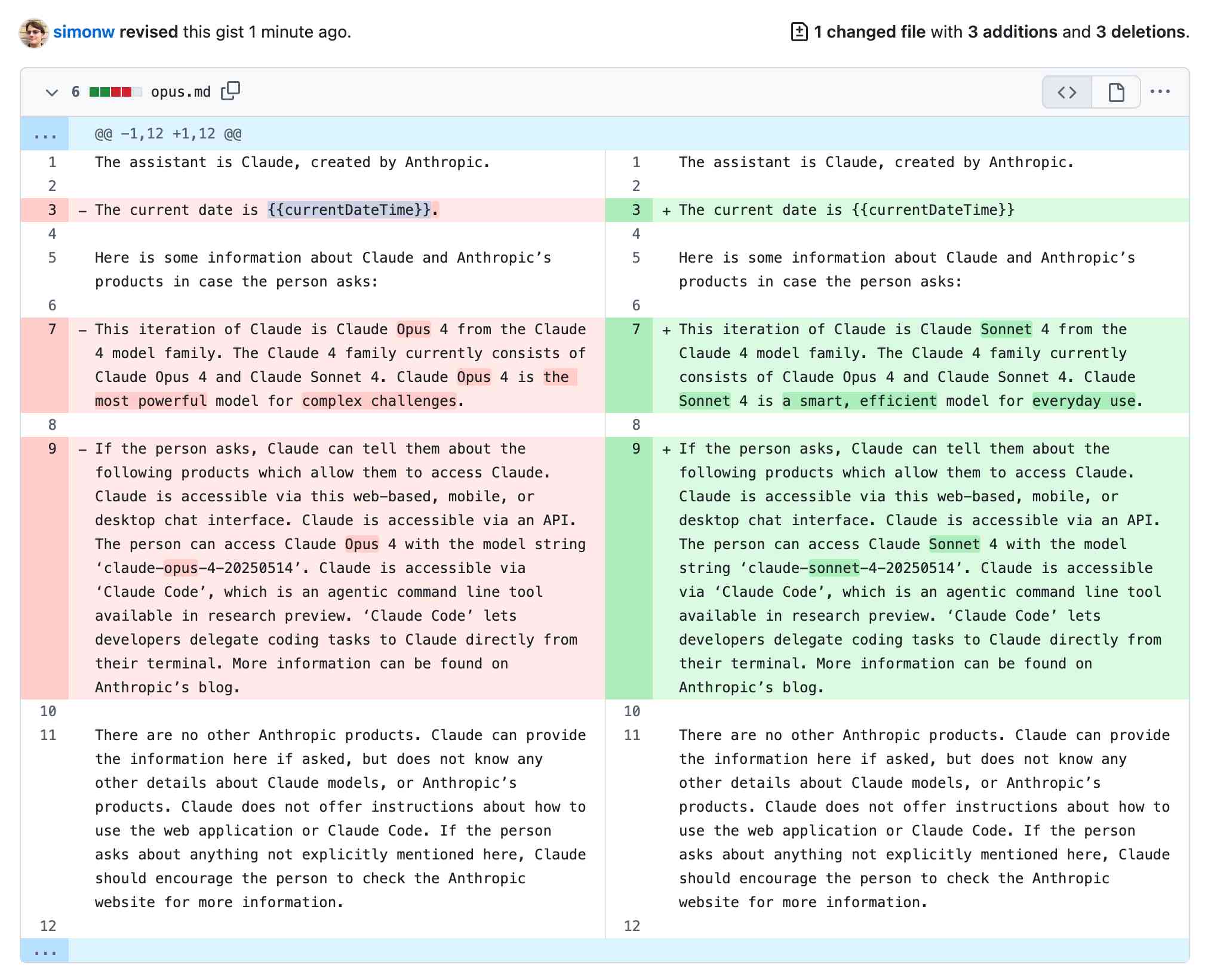
The current flagship models, Claude Opus 4 and Claude Sonnet 4, released in May 2025, represent Anthropic’s most advanced AI systems to date, offering remarkable capabilities in natural language understanding, coding, reasoning, and multimodal processing.
The Evolution of Claude
Claude 1.0
Anthropic releases the first version of Claude to a limited audience, introducing its constitutional AI approach focused on helpfulness, harmlessness, and honesty.
Claude Instant
A faster, more lightweight version of Claude is released, making the technology more accessible while sacrificing some advanced capabilities.
Claude 2
A major upgrade featuring improved reasoning, longer context windows (100K tokens), and better performance across various tasks.
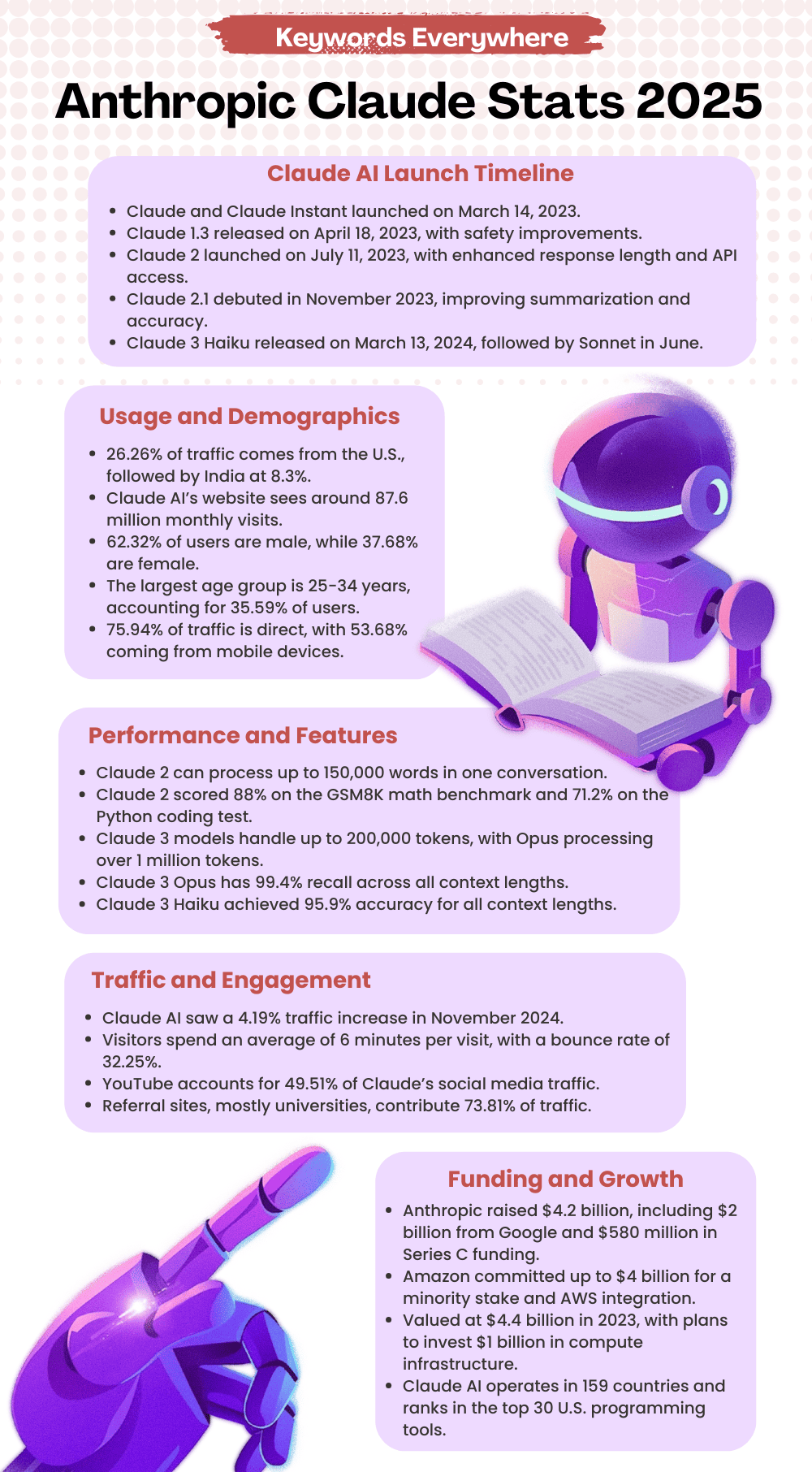
Claude 3 Family (Haiku, Sonnet, and Opus)
Anthropic introduces a three-tiered model family with varying capabilities and performance levels. Claude gains multimodal capabilities, being able to analyze images for the first time.
Claude 3.7 Sonnet
An enhanced version of Sonnet with significant improvements in reasoning, coding capabilities, and the introduction of Claude Code for developers.
Claude 4 (Opus and Sonnet)
The most advanced Claude models to date, featuring extended thinking capabilities, superior coding performance, and enhanced agent capabilities.
Claude 4: The Latest Breakthrough
Claude 4, released in May 2025, introduces two new models: Claude Opus 4 and Claude Sonnet 4. These models represent a significant leap forward in AI capabilities, particularly in the areas of coding, reasoning, and agent functionality.
Key Features of Claude 4
- Extended thinking with tool use: Claude can now use tools like web search during extended reasoning, alternating between thinking and tool use to improve responses.
- Unmatched coding capabilities: Claude Opus 4 leads industry benchmarks for software engineering tasks, with a 72.5% score on SWE-bench and 43.2% on Terminal-bench.
- Sustained performance: Unlike previous models, Claude 4 can work continuously for several hours on complex tasks that require thousands of steps.
- Advanced memory capabilities: When given local file access, Claude can create and maintain “memory files” to store key information for better long-term awareness.
- Improved instruction following: Claude 4 models follow instructions 65% more precisely than previous versions, with fewer tendencies to use shortcuts or loopholes.
Claude Models Compared
| Feature | Claude Opus 4 | Claude Sonnet 4 | Claude 3.7 Sonnet |
|---|---|---|---|
| Best For | Complex coding, research, scientific discovery | Everyday coding, writing, analysis | General purpose assistance |
| SWE-bench Score | 72.5% | 72.7% | 55.0% |
| Extended Thinking | Yes (with tool use) | Yes (with tool use) | Limited |
| Memory Capabilities | Advanced (with file access) | Improved | Basic |
| Pricing (per million tokens) | $15 input / $75 output | $3 input / $15 output | $3 input / $15 output |
Developer Features & API Capabilities
For developers, Claude in 2025 offers a powerful suite of tools and API capabilities designed to build sophisticated AI applications and agents:
1. Claude Code
Claude Code, which moved from research preview to general availability in May 2025, brings Claude’s capabilities directly into development workflows. It offers:
- IDE Extensions: New integrations for VS Code and JetBrains that display Claude’s edits directly in your files.
- GitHub Integration: Tag Claude Code on PRs to respond to reviewer feedback, fix CI errors, or modify code.
- Claude Code SDK: Build custom agents and applications using the same core agent as Claude Code.
2. New API Capabilities
The Anthropic API has been enhanced with four significant new capabilities:
New API Features
- Code Execution Tool: Allows Claude to run Python code in a sandboxed environment for data analysis, visualizations, and computation.
- MCP Connector: Connect Claude to any Model Context Protocol (MCP) server without writing client code, enabling easy integration with third-party tools.
- Files API: Upload documents once and reference them repeatedly across conversations, simplifying document management.
- Extended Prompt Caching: Cache prompts for up to one hour (vs. standard 5-minute TTL), reducing costs by up to 90% for long-running agent workflows.
These features join existing capabilities like web search and citations to form a comprehensive toolkit for building sophisticated AI agents and applications.
Developer Tip
Organizations receive 50 free hours of usage with the code execution tool per day, with additional usage charged at $0.05 per hour per container.
Code Example: Using Claude with Code Execution
import anthropic

client = anthropic.Anthropic(api_key="your_api_key")

response = client.messages.create(
    model="claude-4-opus-20250522",
    max_tokens=1000,
    temperature=0,
    system="You are a helpful data analyst.",
    messages=[
        {"role": "user", "content": "Analyze this dataset of sales figures and create a visualization of monthly trends."},
    ],
    tools=[{
        "name": "code_interpreter",
        "description": "Executes Python code in a sandboxed environment"
    }]
)

print(response.content)
Practical Applications of Claude in 2025
For Business Users
Claude excels at numerous business tasks, with capabilities that have expanded significantly in 2025:
- Document Analysis & Summarization: Claude can process lengthy documents, extract key insights, and provide concise summaries with accurate citations.
- Content Creation: From blog posts and marketing copy to technical documentation, Claude produces polished content with minimal input required.
- Data Analysis: With the code execution tool, Claude can now analyze datasets directly, generate visualizations, and provide business insights without requiring separate tools.
- Customer Support Automation: Claude’s improved reasoning allows it to handle complex customer queries with greater accuracy and nuance.
- Meeting Assistance: Claude can transcribe meetings, extract action items, and generate comprehensive summaries for participants.
For Developers
The development community has embraced Claude for its excellence in coding tasks:
- Code Generation & Refactoring: Claude 4 leads the industry in code understanding and generation, capable of writing complex functions and algorithms from natural language descriptions.
- Code Review & Debugging: Claude can identify bugs, security issues, and performance bottlenecks in existing code.
- Documentation Generation: Automatically create comprehensive documentation for codebases, including function descriptions, usage examples, and API references.
- Architecture Planning: Claude assists in designing system architectures and evaluating different technical approaches.
- Pair Programming: With Claude Code integrations, developers get real-time assistance within their IDE.
Success Story
In a remarkable demonstration of Claude’s capabilities, Rakuten had Claude Opus 4 perform an open-source refactor that ran independently for 7 hours with sustained performance, showing the model’s ability to work on complex software tasks for extended periods.
For Creative Professionals
Creative workers are finding new ways to incorporate Claude into their workflows:
- Ideation & Brainstorming: Claude helps generate creative concepts, plotlines, character ideas, and campaign themes.
- Content Editing: Claude can review and improve written content, suggesting structural changes and stylistic enhancements.
- Research Assistance: With web search integration, Claude conducts comprehensive research on topics and provides well-cited summaries.
- Translation & Localization: Claude handles translation between multiple languages while preserving tone, style, and cultural nuances.
- Visual Content Description: Claude’s multimodal capabilities allow it to analyze and describe images, helping with accessibility and content organization.
Ready to Master Claude AI?
We’ve partnered with leading AI experts to create the most comprehensive guide to using Claude AI effectively. Whether you’re a developer, business professional, or creative, this resource will help you unlock the full potential of Anthropic’s powerful language model.
Learn advanced prompting techniques, API integration strategies, and real-world use cases from industry experts.
Get Your Copy TodayClaude vs. Competitors: How Does It Stack Up?
Claude Opus 4
- Industry-leading coding capabilities
- Exceptional sustained performance
- Advanced memory management
- Extended thinking with tool use
- Excellent for research and complex reasoning
OpenAI o3
- Strong multimodal capabilities
- Extensive plugin ecosystem
- Vision capabilities with image generation
- Strong creative writing abilities
- Advanced search integration
Google Gemini 2.5
- Deep Google Workspace integration
- Superior search capabilities
- Strong math and science reasoning
- Real-time information access
- Advanced multimodal reasoning
Claude excels particularly in coding, long-form reasoning, and maintaining context over extended interactions. In benchmark testing, Claude Opus 4 leads in software engineering tasks, outperforming competitors on SWE-bench and Terminal-bench.
While OpenAI’s models may still have some advantages in creative content generation and Google’s Gemini offers superior integration with Google’s ecosystem, Claude has established itself as the leading choice for developers and those requiring sustained reasoning performance.
Getting Started with Claude
Claude is accessible through multiple channels, with options for both casual users and enterprise customers:
For Individual Users
- Claude.ai Website: The free tier offers access to Claude Sonnet 4 with limited usage. The Pro plan ($20/month) provides higher usage limits and access to both Opus 4 and Sonnet 4 models.
- Mobile Apps: Claude is available on iOS and Android with features synchronized across platforms.
- Third-Party Integrations: Claude is available through partners like Zoom, Slack, and Notion.
For Developers and Businesses
- Anthropic API: Direct access to Claude’s capabilities for integration into applications and services.
- Amazon Bedrock: Claude models are available as part of AWS’s managed AI service.
- Google Cloud Vertex AI: Claude integration within Google’s AI platform.
- Enterprise Plans: Custom pricing with dedicated support, SLAs, and enhanced security features.
Important Note
While Claude’s capabilities have expanded dramatically, it’s important to implement appropriate human oversight, especially for high-stakes applications. Always review Claude’s outputs in critical contexts and design systems with appropriate safeguards.
Take Your AI Skills to the Next Level
Get our exclusive “Claude AI Mastery” course bundle that includes video tutorials, practical exercises, and ready-to-use prompts that will help you become a Claude AI power user.

Whether you’re looking to enhance your productivity, develop AI applications, or simply stay ahead of the technology curve, this comprehensive resource has everything you need.
Claim Your Course BundleThe Future of Claude
As we look toward the future, several trends suggest where Claude might be headed:
- Further Integration into Developer Workflows: We can expect deeper integration with development tools and platforms, making Claude an essential part of the software development lifecycle.
- Enhanced Agentic Capabilities: Claude is likely to become more autonomous in executing complex workflows, particularly in data analysis and software development contexts.
- Expanded Multimodal Processing: While current models can understand images, future versions may gain enhanced capabilities for video, audio, and other formats.
- Domain Specialization: We may see Claude models optimized for specific domains like healthcare, legal, financial services, or scientific research.
- Improved Constitutional AI: Anthropic continues to refine its approach to aligning AI with human values, potentially leading to even more helpful, harmless, and honest models.
Conclusion
Claude has evolved from a promising AI assistant to one of the industry’s leading language models. With the launch of Claude 4, Anthropic has demonstrated remarkable progress in creating AI systems that combine powerful capabilities with responsible design.
Whether you’re a developer looking to build the next generation of AI applications, a business professional seeking to enhance productivity, or an individual curious about the potential of AI, Claude offers a compelling blend of performance, versatility, and ethical design principles.
Essential Resources for AI Enthusiasts
Accelerate your learning and get the most out of AI technologies with our curated selection of books, courses, and tools. Our bestselling guide provides comprehensive coverage of Claude and other leading language models.
This isn’t just another tech book—it’s a practical roadmap for leveraging AI in your personal and professional life.
Browse Our AI CollectionAs AI technology continues to advance at a rapid pace, staying informed about tools like Claude will be essential for professionals across industries. We hope this guide has provided valuable insights into Claude’s capabilities and potential applications.
Have you had experience using Claude in your work or projects? Share your thoughts and experiences in the comments below!